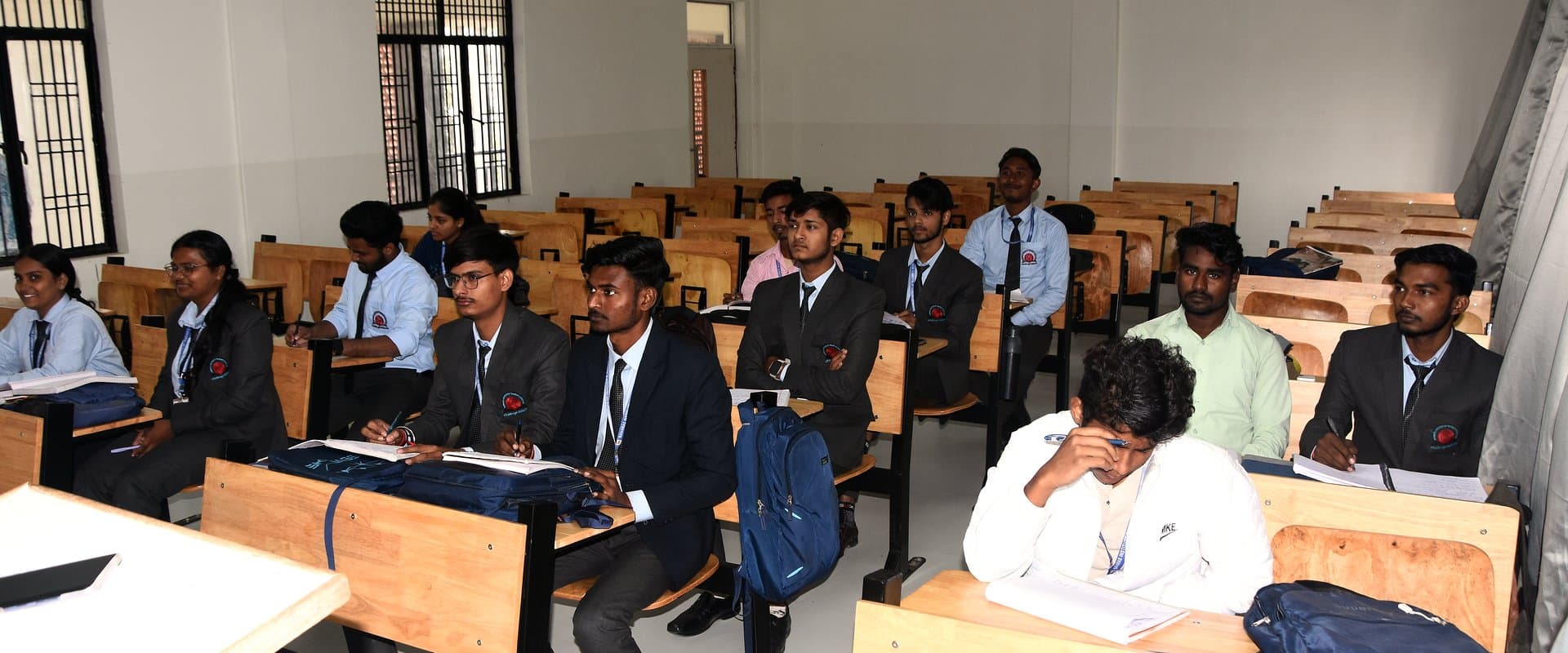
Institutions, like people, are shaped by what they survived and what they chose to do in moments of quiet growth. Banaras Institute of Teacher's Education (BITE) has had both. This is a short institutional history — the dates that mark who we've become since 2003.
2003 — Founding
Banaras Institute of Teacher's Education was established by Purwanchal Educational Trust in 2003. The Trust's mandate was to contribute to teacher education in eastern Uttar Pradesh, a region where quality teacher-training capacity had historically lagged behind the demand. The inaugural programme was B.Ed — the trust's founding conviction was that a good teacher education college is the most consequential institution you can build in any community.
The college was granted NCTE recognition for B.Ed the same year.
2004 — MGKVP affiliation
BITE's affiliation with Mahatma Gandhi Kashi Vidyapith (MGKVP) was formalised. From this point onward, BITE's degrees would be awarded in MGKVP's name — anchoring BITE's graduates to a university that was itself recognised under UGC Section 2(f) and 12(B). That held for every programme until the AKTU-affiliated MBA arrived in 2026.
2005 — B.P.Ed launch
The second programme — Bachelor of Physical Education (B.P.Ed) — launched. NCTE recognition followed. This reflected a conviction that teacher training shouldn't be narrow; physical education had been under-served in UP, and adding it broadened BITE's contribution.
2006 — Undergraduate programmes
BA and B.Com were added. This marked a shift from a pure teacher-training institution to a multidisciplinary college. The founding trustees debated this move carefully — a strict B.Ed-only identity had clarity, but it limited the kind of cross-disciplinary environment they wanted students to experience. The multidisciplinary decision was made deliberately.
2011 — UGC Section 2(f) and 12(B)
MGKVP's UGC Section 2(f) and 12(B) recognition was reaffirmed. For BITE, this meant that graduates became eligible for central-government grants, scholarships, and national competitive exam frameworks.
2014 — First PG programmes
M.A. Home Science (Food & Nutrition) and M.Com launched. The decision to start with Home Science reflected a specific regional need — graduates in Home Science found immediate employment in UP's significant food-processing and nutrition sectors.
2015 — MA Hindi and MA Sociology
Two more MA programmes launched. Hindi, in particular, was a natural fit — Kashi's literary tradition gave the Hindi department immediate depth.
2016 — D.El.Ed (BTC) recognition
D.El.Ed (Diploma in Elementary Education, also called BTC) was recognised by NCTE on 23 March 2016 and affiliated to SCERT on 15 November 2016. This 2-year diploma targets elementary teaching — Classes I–VIII, the level the Right to Education Act 2009 covers — and admits graduates through the state's UPBEEC counselling. It remains BITE's one SCERT-UP programme.
2022 — Major expansion
A significant expansion year: M.A. Geography, M.A. Political Science, B.Sc., and BCA were all launched. The expansion reflected both student demand (BCA had been heavily requested) and a mature institutional capacity to run more programmes without diluting quality.
2024 — BBA
BBA (Bachelor of Business Administration) was added — the final piece of the undergraduate multidisciplinary picture. UG offerings now covered Humanities (BA), Commerce (B.Com), Science (B.Sc.), Management (BBA), and Computer Applications (BCA).
2025 — New leadership and NEP 2020 reforms
Prof. O. P. Rai took charge as Director. His academic credentials — Ph.D., Postdoc at BHU, National Awardee (2016), UGC project leadership, NAAC peer-team experience — brought institutional-scale thinking to BITE. Under his leadership, BITE began a structured review of curriculum in light of NEP 2020 — cross-disciplinary electives, ABC credit transfer, Indian Knowledge Systems integration.
Pedagogical reforms and technology integration took priority: smart classrooms, digital lab upgrades, and the I-D-E-A Framework (Introduction → Define → Example → Apply) were codified.
2026 — The MBA, and a second affiliating university
AKTU (Dr. A.P.J. Abdul Kalam Technical University, Lucknow) granted BITE its MBA affiliation by letter No. 2026/12142 dated 20 June 2026 — AKTU College Code 1284, 60 sanctioned seats — and the programme carries AICTE approval (F.No. Northern/1-46284987823/2026/EOA). It is the first BITE programme whose degree is awarded outside MGKVP's name, and the first to bring a second affiliating university onto the campus. The inaugural 2026-27 cohort is the Golden Batch.
Where that leaves BITE today
23 years in. 17 programmes — fifteen MGKVP-affiliated, the MBA under AKTU and AICTE, and the D.El.Ed under SCERT-UP. Over 5,000 alumni. A 27+ faculty group with Ph.D., UGC-NET qualifications across 12 departments. A campus rhythm rooted in Kashi's pedagogical heritage and aligned with modern NEP 2020 practice.
What comes next is being built now — blog channels, alumni engagement, institutional research output, and the first MBA cohort finding its feet. 23 years is both long and short. The work continues.
Was this article helpful?