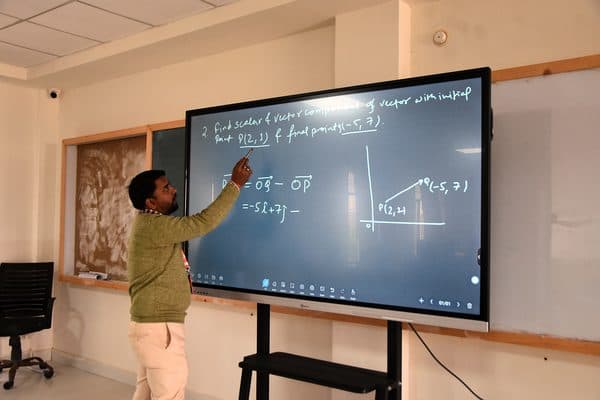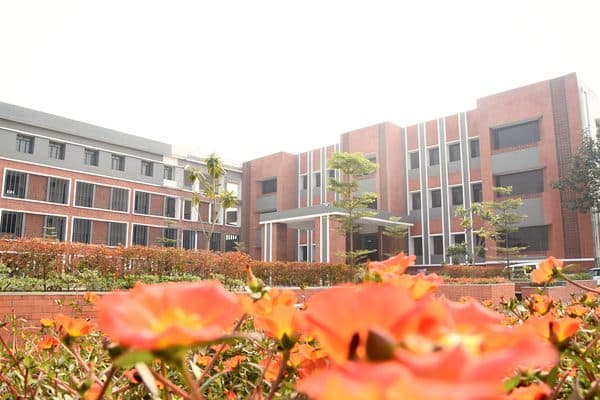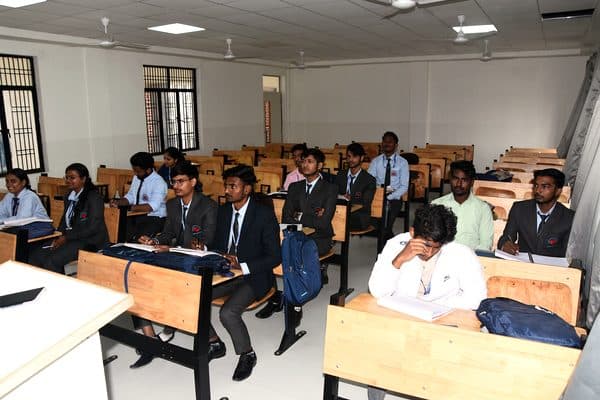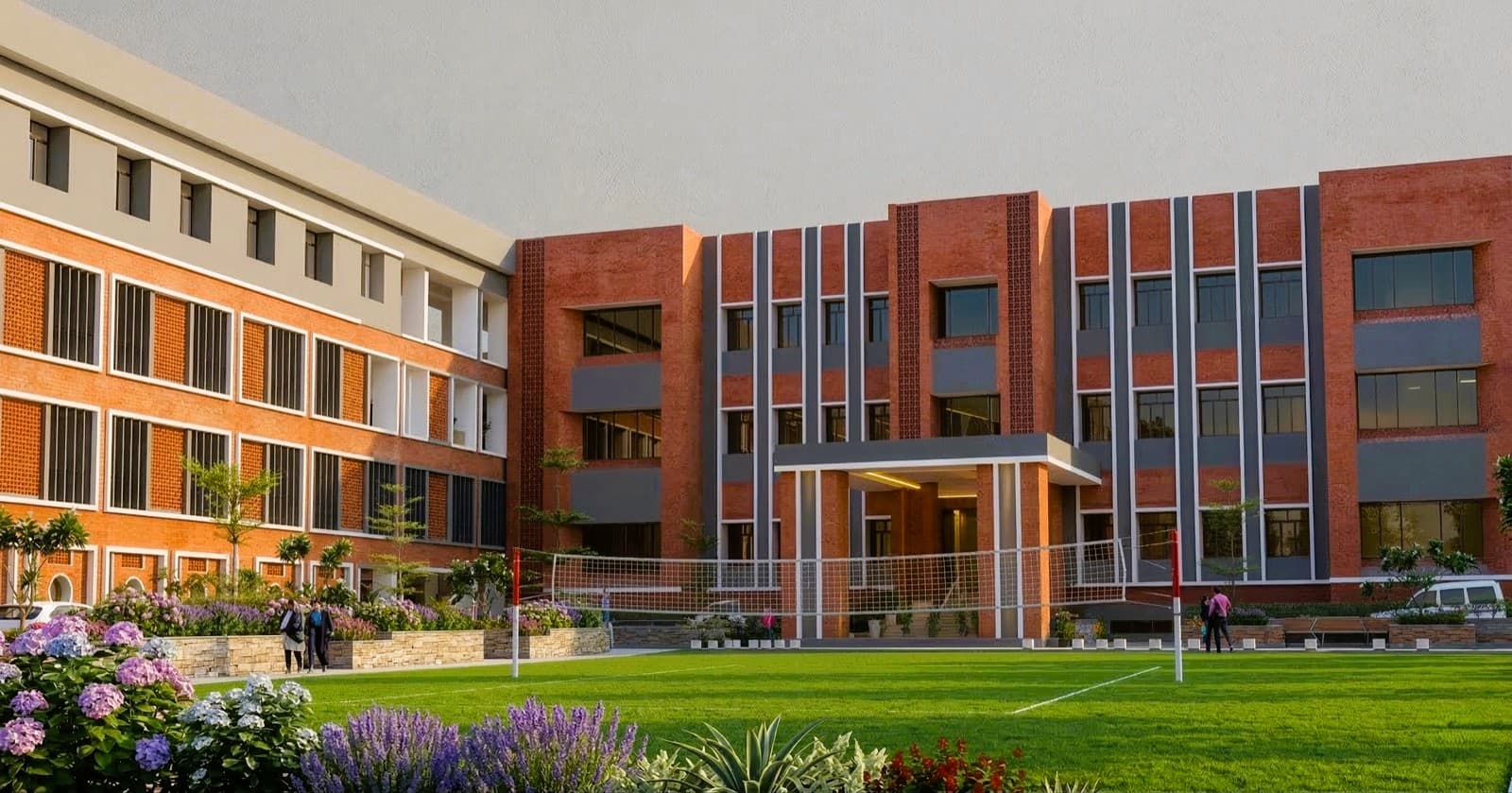
Students walking out of their 12th-board exam often arrive at the same fork in the road: BBA or BCA? Both are three-year MGKVP-affiliated undergraduate degrees at BITE Varanasi, both have 60 sanctioned seats per year, both feed into respected master's pathways (MBA from BBA, MCA from BCA), and both are well-respected by recruiters across Eastern Uttar Pradesh. But they are not interchangeable. The choice will quietly shape three years of your time, which set of friends you spend that time with, and which industry you exit into. This guide gives you a clean framework to decide.
The 60-second version
Pick BBA if:
- You like reading people, organising teams, persuading others to your point of view.
- You see yourself in business meetings, presentations, sales calls, marketing brainstorms.
- You want to write the CAT/MAT/XAT entrance exams and pursue an MBA after graduation.
- You enjoy case-method learning — reading 8-page business cases and arguing strategies in class.
Pick BCA if:
- You enjoy logical problem-solving, reading documentation, debugging your own mistakes.
- You see yourself working with code, databases, mobile apps, AI/ML systems.
- You want to write the GATE / NIMCET exam pathways into M.Sc. CS or MCA.
- You're patient with iteration — happy spending two hours fixing a single error message.
If both descriptions feel partly true (which is common), keep reading.
What the two curricula actually cover
BBA at BITE (3 years, 6 semesters)
The BBA programme is built around the classical management-school spine — Principles of Management, Financial Accounting, Business Statistics, Marketing Management, Human Resource Management, Operations Management, Business Law, Business Communication, and Strategic Management. Two newer cousins fill out the curriculum: Entrepreneurship & Innovation, and Business Analytics. Across the three years, students do case-study discussions every week, group presentations every fortnight, and a semester-long capstone project in the final year. BITE's BBA pedagogy borrows lightly from the case-method tradition — short cases, discussion-led classes, with the lecturer as facilitator rather than as a one-way information source.
BCA at BITE (3 years, 6 semesters)
The BCA programme starts with programming fundamentals — C in semester 1, C++ in semester 2 — and moves up the stack. Java, Python, web development (HTML / CSS / JavaScript / a server-side framework), database management systems (SQL + a tour of NoSQL), operating systems, data structures and algorithms, computer networks, software engineering, and an introduction to AI / Machine Learning fill out the syllabus. Each semester runs theory papers alongside graded lab work; the 60-system computer lab is open through college hours for student practice. The final semester includes a major project — students typically build a complete web or mobile application, often in a 2-3 person team.
The two curricula have one accidental overlap (Business Mathematics in BBA, Discrete Mathematics in BCA — both teach you to think in clean steps) and one intentional one (BCA includes a 4-credit "IT for Management" paper because most BCA grads end up in IT services where they need to communicate technically with non-technical managers).
Career outcomes — what students actually end up doing
The single most useful data point: where do BITE's BBA and BCA graduates from the last five years actually work today?
BBA graduates
- Banking — entry roles: Bank PO, Probationary Officer roles in private and public-sector banks. Many sit IBPS PO / Clerical / SBI PO after graduation; the BITE alumni network includes officers in SBI, PNB, BoB, HDFC, ICICI.
- Insurance & financial services: Sales and customer-onboarding roles at insurance and broking firms (LIC, ICICI Prudential, Bajaj Allianz).
- Retail and FMCG management: Trainee management roles at retail chains and FMCG distributors operating in Eastern UP and across India.
- Family business: A substantial share of BBA graduates from BITE go back to manage or expand family businesses (textile, agri-trade, hospitality, construction) using what they learned about accounting, marketing, and HR.
- MBA progression: Strong CAT/XAT/MAT scorers from BITE BBA cohorts have gone to MGKVP MBA, Lucknow / Allahabad business schools, and select IIM-tier alternatives via state-level entrance exams.
- Government exams: UP Civil Services (UPPSC), SSC CGL, Railway management cadre.
BCA graduates
- IT services: Software-engineering entry roles at TCS, Infosys, Wipro, Tech Mahindra, HCL, Cognizant — for students who clear the campus / off-campus tests these companies conduct.
- Web and mobile development: Junior web-developer roles at agencies and local Varanasi / Lucknow software shops; freelance web developers serving small businesses.
- Data analytics: Junior data-analyst roles at financial services and FMCG firms — typically requires a 3-4 month Excel / Power BI / SQL upskilling outside the syllabus.
- MCA / M.Sc. CS progression: Many BCA grads pursue MCA (2-year master's) at MGKVP or other state universities, or M.Sc. Computer Science where eligible.
- Government IT exams: SSC IT cadre, NIELIT exams, banking IT specialist officer exams.
- Startup / freelance: A small but rising share build their own products or freelance for international clients via online platforms.
Fees and economics
BBA and BCA at BITE follow the MGKVP-approved fee structure for undergraduate programmes. The current semester-wise breakdown (tuition + development + library + lab + caution deposit + exam fees) lives on the Fee Structure page — figures there are the authoritative source. The two programmes have similar tuition profiles; BCA carries a slightly higher lab-fee component because of the computer-lab maintenance overhead.
UP State Government scholarships (SC / ST / OBC / Minority / EWS), the National Scholarship Portal, and BITE's own merit scholarship (for students scoring 60%+ in the 10+2 qualifying exam) apply to both programmes. Need-based fee concession (up to 20%) is reviewed case-by-case by the Purwanchal Educational Trust.
How a Varanasi / Eastern UP student should decide
Here are five concrete questions that point most students toward their answer.
1. In school, did you enjoy Accountancy, Economics, Business Studies — or did you enjoy Computer Science, Information Practices, Mathematics? The honest answer is usually the right indicator. Don't fight it. 2. When you watch YouTube, do you click on entrepreneur interviews (BBA energy) or coding tutorials (BCA energy)? Where your attention spontaneously goes is a signal. 3. Are you patient with iteration? Code rarely works the first time. You'll spend hours fixing errors only you can see. If that exhausts you, BCA will exhaust you for three years. 4. Are you comfortable speaking in groups? Both careers require communication, but BBA is more presentation-heavy from day one — case discussions, group work, sales pitches. 5. What's your CAT vs GATE preference if you'll do a master's? Plenty of BCA students take CAT and switch into management; BBA-to-MCA is harder. Default toward the bachelor's that gives you both doors.
What students from outside Varanasi should also factor in
BITE is in Babatpur, on Varanasi's western edge — within direct rail / bus reach of Jaunpur, Mirzapur, Ghazipur, Azamgarh, Chandauli, Bhadohi, and Prayagraj. The 60-seat BBA and 60-seat BCA cohorts mean small batches and personal faculty attention — a different experience from the 200+ student lecture halls at some larger MGKVP-affiliated colleges. Hostel options in Babatpur are materially cheaper than central Varanasi or Lucknow accommodation markets.
Next steps
- Read the BBA admission page for eligibility, fees, and the 2026-27 application process.
- Read the BCA admission page.
- Talk to a current student or alumnus — call the admissions desk on the number on the Contact page and we'll connect you.
- Apply online for the 2026-27 cycle before the deadline of 30 September 2026. For BBA, note the university's own precondition: MGKVP's Samarth portal registration for 2026-27 closes Wednesday 30 September 2026. Register at mgkvpadmission.samarth.edu.in and select BITE (College Code 134) — or call +91 77040 33222 and we complete it with you on the phone in 15 minutes. The university recognises no admission without this registration.
Was this article helpful?