The UP B.Ed JEE (Joint Entrance Examination) is the single gateway to all 2-year Bachelor of Education (B.Ed) programmes offered by NCTE-approved colleges affiliated with state universities in Uttar Pradesh. If you intend to do your B.Ed at BITE Varanasi, Lucknow University, Allahabad State University, or any of the 200+ NCTE-recognised B.Ed colleges in UP, the UP B.Ed JEE is the exam you appear in.
This guide covers everything you need to know for the 2026-27 admission cycle — eligibility, application steps, important dates, exam pattern, syllabus, preparation strategy, counselling, and how the BITE Varanasi seat allotment fits into the broader UP B.Ed JEE process.
What is the UP B.Ed JEE?
The UP B.Ed JEE is a state-level entrance examination conducted annually by a state-nominated nodal university on behalf of the Government of Uttar Pradesh, Department of Higher Education. The exam tests an applicant's general aptitude, language proficiency, and subject knowledge to determine merit-based admission to two-year B.Ed programmes across UP.
Approximately 3 to 4 lakh candidates appear every year. The exam runs in the offline (OMR / pen-and-paper) mode at designated centres across all 75 districts of UP plus selected centres in neighbouring states. The merit list from the exam feeds directly into a centralised online counselling process — there is no separate test for individual colleges.
Who conducts UP B.Ed JEE 2026?
The conducting authority rotates among major UP state universities. Recent conducting institutions have included Bundelkhand University Jhansi, Lucknow University, and Mahatma Jyotiba Phule Rohilkhand University Bareilly. The 2026 conducting university is announced in the official notification published in March-April 2026 on the dedicated UP B.Ed JEE portal.
For the most current notification — including the conducting university's name, the official exam portal URL, and the helpline contact — search "UP B.Ed JEE 2026 notification" or visit your nearest UP state university website's admissions section.
Eligibility for UP B.Ed JEE 2026
You are eligible to appear in the UP B.Ed JEE 2026 if you meet the following criteria:
- Educational qualification: Bachelor's degree (BA / B.Sc / B.Com / BBA / BCA / or equivalent) from a UGC-recognised university with minimum 50% aggregate marks. The qualifying degree can be from any stream — Arts, Science, Commerce, or Computer Applications.
- Reserved category relaxation: 45% minimum aggregate for SC / ST / OBC / PwD candidates as per UP state reservation norms.
- Science / Mathematics methodology candidates sometimes require 55% in the qualifying degree (check the official notification annually).
- Final-year graduates can apply provisionally; final eligibility is confirmed only when you produce your bachelor's mark sheet at counselling document verification.
- Age limit: No upper age limit, per NCTE norms. The effective lower bound is graduation completion.
- Nationality: Indian citizens, OCI cardholders, and other categories specified by the UP government. Candidates from outside Uttar Pradesh are eligible but seats reserved for UP-domicile students are managed through state norms.
Important dates — UP B.Ed JEE 2026 (typical timeline)
Specific 2026 dates are confirmed in the official notification. The typical timeline runs as follows:
| Stage | Typical month |
|---|---|
| Notification published | March – April |
| Application portal opens | April – May |
| Last date for application | Mid-May |
| Application correction window | Late May |
| Admit card download | Late May – early June |
| Exam date | May – June |
| Result declaration | Mid – late June |
| Counselling registration | June – July |
| Choice filling & seat allotment (multiple rounds) | July – August |
| Document verification & fee payment at allotted college | July – August |
| Academic session start | August – September |
Bookmark the official UP B.Ed JEE portal and check it weekly between March and August 2026 — date shifts of 1-2 weeks are common between cycles.
How to apply for UP B.Ed JEE 2026
The application is fully online via the dedicated UP B.Ed JEE 2026 portal. The process has six steps:
1. Registration: Create an account using your mobile number and email ID. You will receive a registration number — note it down. 2. Fill the application form: Personal details, contact information, qualifying-exam details (10+2 percentage, graduation percentage, university name). 3. Upload documents: Scanned passport-size photograph, signature, 10+2 mark sheet, graduation mark sheet (if completed), category certificate (if applicable), Aadhaar. 4. Choose exam centre preferences: Select 3 preferred districts; the final centre is allotted based on availability. 5. Pay the application fee: Approximately ₹1,400 for General / OBC and ₹700 for SC / ST candidates (exact fee confirmed in the notification). Pay online via UPI, debit / credit card, or net banking. 6. Download confirmation: Save the confirmation page and the completed application as PDF.
Common application mistakes to avoid:
- Mismatched name spellings between Aadhaar, 10+2 mark sheet, and the application form.
- Photo and signature uploaded in wrong dimensions — check the specified pixel sizes carefully.
- Forgetting to print the final confirmation page after fee payment.
- Selecting only one exam centre district instead of three.
Exam pattern — UP B.Ed JEE 2026
The UP B.Ed JEE has two papers, both held on the same day with a lunch break in between:
| Paper | Duration | Marks | Sections |
|---|---|---|---|
| Paper I | 3 hours | 200 | General Knowledge (50 questions, 100 marks) + Language: Hindi or English (50 questions, 100 marks) |
| Paper II | 3 hours | 200 | General Aptitude Test (50 questions, 100 marks) + Subject Ability Test (50 questions, 100 marks) |
Total marks: 400 across both papers.
- Question format: Multiple Choice Questions (MCQ) with four options each.
- Marking scheme: +2 for each correct answer. Negative marking: −1/3 (i.e., 0.67 marks deducted) for each incorrect answer. Unattempted questions: 0.
- Mode: Offline (OMR sheet, pen-and-paper).
- Medium: Question paper in bilingual format — both Hindi and English. You may attempt in either language.
The Subject Ability Test in Paper II is stream-specific. When applying, you choose one of four subject groups based on your graduation:
- Arts: History, Political Science, Economics, Sociology, Geography, Education, Philosophy, Psychology, Hindi, English, Sanskrit, Urdu literature.
- Science: Physics, Chemistry, Biology, Mathematics, Computer Science.
- Commerce: Business Studies, Accountancy, Economics, Statistics.
- Agriculture: Agronomy, Animal Husbandry, Horticulture, Soil Science.
Pick the group that aligns with your bachelor's degree — this becomes the basis of your B.Ed teaching specialisation later.
Detailed syllabus — UP B.Ed JEE 2026
Paper I — General Knowledge + Language
General Knowledge (50 questions):
- Current affairs (national and international, last 12 months)
- Indian history (ancient, medieval, modern)
- Indian polity & constitution (fundamental rights, governance, elections)
- Indian geography (physical, economic, political)
- General science (physics, chemistry, biology — class 10 level)
- Indian economy and budget
- Sports, awards, important dates
- Five-year plans and government schemes
- Books and authors
Language Comprehension (50 questions) — choose Hindi OR English:
Hindi:
- अपठित गद्यांश (unseen comprehension passages)
- संधि, समास, पर्यायवाची, विलोम (grammar)
- रस, छंद, अलंकार (literary devices)
- मुहावरे और लोकोक्तियाँ (idioms)
English:
- Unseen reading comprehension
- Vocabulary (synonyms, antonyms, one-word substitutes)
- Grammar (tenses, articles, prepositions, voice change, narration)
- Idioms and phrases
- Common errors
Paper II — General Aptitude + Subject Ability
General Aptitude Test (50 questions):
- Reasoning ability (verbal, non-verbal, analytical)
- Numerical ability (arithmetic, basic algebra, percentages, ratios, profit-loss)
- Data interpretation (graphs, tables, charts)
- Mental ability (series, coding-decoding, blood relations, direction sense)
Subject Ability Test (50 questions) — based on your chosen group:
- Questions are pitched at bachelor's degree level in your specialisation subjects.
- For Arts, Science, Commerce, Agriculture — see the detailed sub-topics in the official notification.
Preparation strategy — 6-month plan
A focused 6-month preparation window (December 2025 to May 2026) is sufficient for most candidates who have a UG background. Here's how to allocate the time:
Months 1-2: Foundation building
- Cover Paper I General Knowledge using a standard competitive-exam GK book (Lucent's General Knowledge or similar). Target: 1 chapter per day.
- Brush up on language fundamentals — pick the language you are stronger in (Hindi or English) and stick with it.
- Solve previous-year UP B.Ed JEE question papers (last 5 years) to understand the difficulty calibration.
Months 3-4: Subject mastery
- Focus on Paper II Subject Ability. Use your bachelor's-degree-level textbooks for revision. For Arts students, NCERT class 11-12 books in your specialisation subject are surprisingly useful.
- Practice General Aptitude — reasoning and arithmetic questions. Allocate 30-45 minutes daily.
Month 5: Mock testing
- Take one full-length mock test every 2-3 days. Time-box yourself strictly (3 hours per paper).
- Review every question — both correct and incorrect — and identify patterns in your errors.
Month 6: Revision + strategy
- Revise high-yield current affairs (last 6 months focus).
- Refine your time-management strategy: average 1.8 minutes per question.
- Plan your guess-vs-skip logic given the −0.67 negative marking (rule of thumb: attempt only if you can eliminate at least 2 of 4 options).
Recommended books:
- UP B.Ed Entrance Exam Guide (Arihant Publications) — programme-specific question bank
- Lucent's General Knowledge — GK fundamentals
- Quantitative Aptitude by R.S. Aggarwal — reasoning + arithmetic
- Subject-specific NCERTs — for the Subject Ability paper
Result and answer key — UP B.Ed JEE 2026
After the exam, the conducting university releases marks in a fixed sequence. Knowing it tells you exactly what to do at each stage:
1. Provisional answer key: Published first, usually within a week or two of the exam. Match it against your recorded responses to estimate your score (+2 per correct, -1/3 per wrong). 2. Objection window: A short window — typically 2-3 days — to challenge any answer you believe is wrong, against a small per-question fee that is refunded if your objection is upheld. This is your only chance to influence the key, so use it if you have a defensible case. 3. Final answer key: Released after objections are reviewed. Your result is computed strictly from this version. 4. Result and rank card: Log in to the official UP B.Ed JEE portal with your registration number and date of birth, then download your scorecard and rank. Save a PDF immediately — you must produce the rank card at counselling document verification. 5. Merit and counselling schedule: Your rank feeds directly into the centralised counselling described below. There is no separate cut-off to "clear" — your rank simply decides your turn in seat allotment.
Check only the official UP B.Ed JEE portal of the conducting university for your result. Third-party result aggregators often lag the official release and occasionally show wrong data; the rank card from the official portal is the only document counselling will accept.
Counselling — what happens after the result
Once your UP B.Ed JEE 2026 result is declared, the counselling process takes over. Here is the sequence:
1. Counselling registration: Pay a counselling fee (approximately ₹500-750) on the counselling portal. This is separate from the exam fee. 2. Choice filling: You list the colleges you would accept admission in, in order of preference. You can list up to 100 colleges. Choose carefully — your seat allotment is determined by your rank and your stated preferences. 3. Seat allotment (multiple rounds): Round 1 publishes a provisional allotment based on rank + preferences + reservation. If you accept, lock the seat and pay the allotment fee. If you decline or upgrade, you participate in subsequent rounds. 4. Document verification: Report to the allotted college (e.g., BITE Varanasi if you are allotted there) with originals: UP B.Ed JEE rank card, 10+2 mark sheet, bachelor's degree mark sheet, character certificate, transfer certificate, caste certificate (if claiming reservation), Aadhaar, 6 passport-size photographs. 5. First-semester fee payment: Pay the first-semester tuition as per the college fee structure. Most UP B.Ed colleges accept online transfer, demand draft, or on-campus payment. 6. Reporting and session start: Join the academic session at the allotted college on the date specified by the college.
Pro tip on choice filling: Do not put one or two colleges in your choice list and hope for the best. UP B.Ed JEE counselling can have 6 to 8 rounds of allotment as upper-rank candidates upgrade. Fill 30-50 colleges in priority order so you have a fallback even if your top choices are exhausted.
BITE Varanasi in the UP B.Ed JEE process
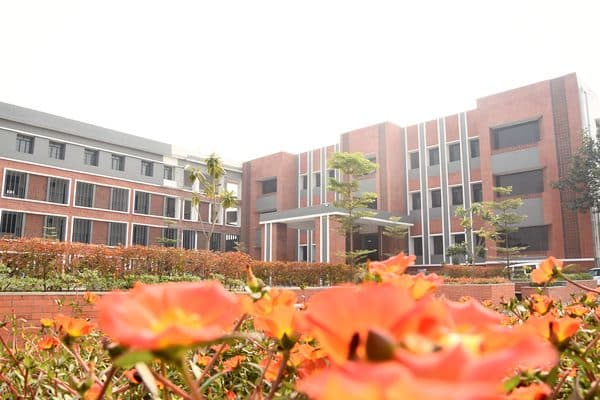
If you intend to pursue B.Ed in eastern Uttar Pradesh, Banaras Institute of Teacher's Education (BITE), Babatpur, Varanasi is one of the most-cited NCTE-recognised options in the catchment. Key facts to consider for your choice list:
- College code on UP B.Ed JEE portal: 134
- NCTE recognition since 2003 — among the longest continuous recognition spans for any private B.Ed college in eastern UP
- MGKVP-affiliated — Mahatma Gandhi Kashi Vidyapith (UGC 2(f) and 12(B) recognised state university)
- 100 sanctioned seats per academic year
- 400+ hours of classroom practicum across a 40+ partner-school network in Varanasi, Jaunpur, Ghazipur, Chandauli, Mirzapur
- Integrated CTET / UPTET / Super-TET preparation built into the final semester
- 92% B.Ed examination pass rate (2025 cohort) and 78% CTET pass rate (2024 cohort)
- 5,000+ alumni institution-wide since 2003, across every BITE programme
- Total tuition fee for 2026-27 cohort: ₹82,000 across 4 semesters per the MGKVP-approved NCTE structure
Read the full programme overview, fees, eligibility, and FAQs on the B.Ed admission 2026-27 page, or visit the Mandatory Disclosure page for downloadable NCTE Recognition Order and MGKVP affiliation letter.
Frequently asked questions
Is UP B.Ed JEE mandatory for B.Ed admission in Uttar Pradesh? Yes — for all 2-year B.Ed programmes at NCTE-approved colleges affiliated with UP state universities, UP B.Ed JEE is the mandatory entrance examination. There is no separate college-level test.
Can I appear in UP B.Ed JEE 2026 if I am from outside UP? Yes. Out-of-state candidates are eligible. However, seats reserved for UP-domicile students are allotted based on state norms; non-domicile candidates compete in the general pool.
What is the validity of the UP B.Ed JEE rank? The rank is valid only for the academic session it was conducted for. To seek admission in the 2027-28 cycle, you must appear in the 2027 exam.
Is there a syllabus difference between UP B.Ed JEE 2025 and 2026? The structure (Paper I + Paper II, 400 marks, MCQ, negative marking) is stable across years. The General Knowledge section auto-updates each year to include the most recent 12 months of current affairs. The Subject Ability paper syllabus stays consistent.
How many attempts are allowed? There is no limit on the number of attempts. Candidates can re-appear in subsequent years if they want to improve their rank.
Can I take the exam in Hindi? Yes. The question paper is bilingual (Hindi and English). You may write your answers in either language; pre-declare your preferred language during the application.
What is a good rank to get into BITE Varanasi? This varies year-to-year based on the cut-off, total candidates, and reservation distribution. Historically, ranks within the top 25,000-40,000 general-merit positions are competitive for BITE. SC / ST / OBC reserved candidates can be allotted at lower ranks per state reservation norms.
Do I need coaching to clear UP B.Ed JEE? Coaching is not mandatory. Most candidates clear the exam with self-study + mock tests + previous-year papers. Coaching is helpful if you struggle with discipline or need structured Subject Ability tuition. Online video resources and free YouTube channels are widely available.
What happens if I do not report for document verification within the deadline? Your seat allotment is cancelled and the seat moves to the next eligible candidate in the merit list. Always report within the stated deadline (typically 5-7 working days from allotment).
Can I withdraw from a B.Ed programme after first-semester admission? Yes, but the refund policy depends on the college and the timing of the withdrawal. Most UP colleges follow UGC norms — full refund of fees if withdrawn within 15 days of admission; partial after that. Check the college fee refund policy carefully.
Next steps
1. Bookmark the official UP B.Ed JEE 2026 portal — check it weekly for the latest notification and date confirmations. 2. Start your 6-month preparation plan if you have not already. Pick up the recommended books and previous-year papers. 3. Decide your subject group for Paper II Subject Ability based on your graduation discipline. 4. Shortlist the colleges you would accept admission in. Read the B.Ed admission 2026-27 page for BITE Varanasi's full programme details. 5. Apply early once the notification opens — last-minute applications run into portal load issues. 6. Plan your counselling logistics — keep all original documents ready, including identity proof, qualification mark sheets, and category certificates.
For BITE-specific admission queries, email enquiry@bitevns.ac.in or call +91-7704033222 (Mon-Sat, 9 AM – 5 PM). For UP B.Ed JEE conducted-university queries, refer to the official notification.
Good luck with your UP B.Ed JEE 2026 preparation.
Was this article helpful?